Tea 101One plant · thousands of traditionsPlain-English guidance

Tea 101 · without the lecture

One plant.
Many teas.

Green, white, yellow, oolong, black, and dark tea all begin with the same species. The astonishing variety comes from where it grows, which leaves are picked, and what happens next.

Meet the six families
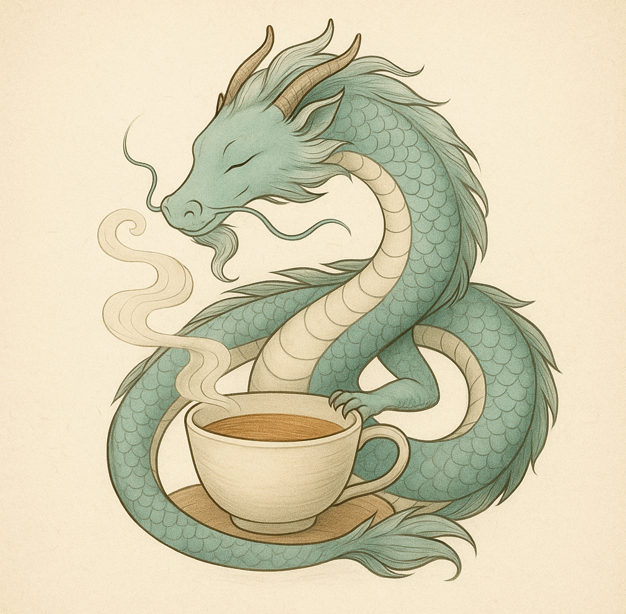
Celestial Dragon Tea dragon curled around a cup
The tea plantCamellia sinensisEvergreen shrub · leaves and buds used for true tea

Start at the leaf

Tea is a camellia.

“True tea” comes from Camellia sinensis, an evergreen plant in the same family as garden camellias.

Cultivar, soil, elevation, weather, picking season, leaf grade, and the tea maker’s choices all shape the cup. Chamomile, peppermint, rooibos, and other herbal drinks can be wonderful, but botanically they are infusions—not tea from Camellia sinensis.

Plain-English versionThe tea family is decided by processing, not by six different plants.

What happens after picking

One fresh leaf can travel six directions.

This is the useful big picture. Real methods vary by region and style, but processing—not flavoring—creates the major tea families.

Fresh leafPicked from Camellia sinensis
01Greenheat early
02Whitewither + dry
03Yellowheat + yellow
04Oolongbruise + partly oxidize
05Blackfully oxidize
06Darkmicrobial transformation

Why China matters

A living library of tea.

Tea’s native range stretches across parts of southern China and neighboring Asia. China’s importance comes from the extraordinary depth and continuity of what people built from that plant.

Across centuries, communities developed distinct cultivars, gardens, tools, processing methods, brewing customs, and trade traditions. A Dragon Well from Zhejiang, a rock oolong from Fujian, and a pu-erh from Yunnan are not interchangeable “Chinese teas.” Each reflects a particular place and body of knowledge.

In 2022, UNESCO recognized China’s traditional tea-processing techniques and related social practices as Intangible Cultural Heritage—covering the six major families and thousands of named teas.

The major families

Six ways to transform the leaf.

These names describe broad processing families. They are a map, not a flavor guarantee—and every family contains enormous variety.

01绿茶 · lǜ chá

Green

Heated early to limit oxidation

The leaves are heated soon after picking—often by pan-firing or steaming—so they keep much of their green character. Dragon Well is a famous pan-fired example.

Often tastesFresh, bright, nutty, grassy, or sweet
02白茶 · bái chá

White

Withered and gently dried

Simple processing does not mean simple flavor. Time, leaf grade, weather, and careful drying can create anything from delicate florals to deep dried-fruit sweetness.

Often tastesSoft, floral, hay-like, fruity, or honeyed
03黄茶 · huáng chá

Yellow

Heated, then gently yellowed

A rare family made with an extra covered-resting step after heating. That slow transformation softens the sharper green notes.

Often tastesMellow, sweet, rounded, and softly vegetal
04乌龙茶 · wūlóng chá

Oolong

Partly oxidized and shaped

Oolong is a huge spectrum, not one flavor. A green Anxi oolong and a roasted Wuyi rock tea can seem like entirely different drinks.

Often tastesFloral, creamy, roasted, fruity, or mineral
05红茶 · hóng chá

Black

Fully oxidized before drying

What English speakers call black tea is called “red tea” in China, after the copper-red color of the brewed liquor. Dian Hong is Yunnan’s celebrated style.

Often tastesMalty, cocoa-like, fruity, floral, or sweet
06黑茶 · hēi chá

Dark

Microbially transformed after heating

Dark tea changes through controlled fermentation and aging. Pu-erh belongs in this wider world, though its own rules, regions, and styles deserve special attention.

Often tastesEarthy, woody, smooth, sweet, or camphor-like
Pu-erh deserves its own note

Raw and ripe are different journeys.

Both are Yunnan teas made under pu-erh traditions, but they reach the cup by different routes.

生 · shēng

Raw pu-erh

Made from sun-dried tea and allowed to change gradually over time. Young raw pu-erh can be fragrant, lively, bitter, sweet, and powerful; aging can deepen and soften it.

Meet Lincang Impression
熟 · shóu

Ripe pu-erh

Fermented through a managed piling process developed to create mature character more quickly. Good ripe pu-erh can be smooth, dark, woody, creamy, and gently sweet.

Meet 2010 Bulang Ripe

Beyond the six

Scented tea and herbal infusions.

花茶 · scented tea

Tea can carry another aroma.

Jasmine tea begins with true tea—often green tea—then gains its fragrance through contact with fresh jasmine blossoms. It is a craft tradition of its own, not a seventh processing family.

Herbal infusions

Delicious, but a different plant.

Chamomile, mint, hibiscus, rooibos, and similar drinks do not come from Camellia sinensis. “Herbal tea” is useful everyday language; “infusion” or “tisane” is the botanical distinction.

The best next lesson is a cup

You do not need to memorize any of this.

Pick a flavor direction, steep the leaf more than once, and notice what changes. Curiosity is enough.

Find your starting tea
Sources & further reading
Kew · Camellia sinensis ↗UNESCO · Chinese tea traditions ↗FAO · Tea and cha ↗